
Metal Knurling: Principles, Techniques, and Applications in Modern Machining
Metal knurling is a machining process used to create a patterned texture on the surface of a workpiece, typically cylindrical. This texture can serve both functional and aesthetic purposes. Functionally, knurling improves grip on tools, fasteners, and handles, while aesthetically it adds a professional, finished appearance. Unlike cutting operations such as turning or milling, knurling is a forming process. This means that instead of removing material, the process displaces and deforms it to create a raised pattern.
There are several types of knurl patterns, each suited for different applications. The most common are straight, diagonal, and diamond patterns. Straight knurls produce parallel lines along the axis of the workpiece, while diagonal knurls create angled lines. Diamond knurls, which are the most widely used, are formed by intersecting diagonal patterns, creating a crisscross texture that provides excellent grip. The choice of pattern depends on the intended use of the part and the desired appearance.
Before beginning the knurling process, proper preparation of the workpiece is essential. The material must be suitable for deformation; softer metals such as aluminum, brass, and mild steel are ideal. Harder materials can be knurled, but they require greater force and may result in increased tool wear. The diameter of the workpiece should also be considered, as certain diameters are better suited to specific knurl pitches. Matching the workpiece circumference to the knurl wheel pitch helps prevent pattern distortion, such as double tracking, where the pattern overlaps incorrectly.
Tool selection and maintenance are also critical factors in successful knurling. Knurl wheels must be sharp, clean, and free from damage to produce a high-quality pattern. Worn or chipped wheels can lead to inconsistent textures and poor surface finish. Regular inspection and replacement of knurling tools help maintain consistent results. Furthermore, proper alignment and rigidity of the machine setup are essential to prevent vibration and ensure uniform pattern formation.
1. Form knurling —- In form knurling the teeth are generated by deformation of the material, because the knurls exert pressure on the piece while it turns. This method is made without
removing material so no chips are produced. Due to deformation of the material the diameter of the piece is increased. The value of this increase is variable as it depends on the material of the piece machined and the form and pitch of the teeth generated.
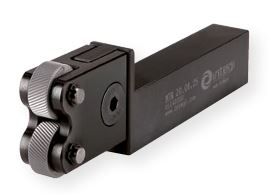
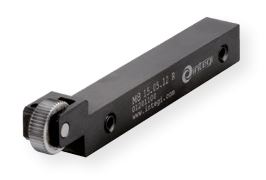
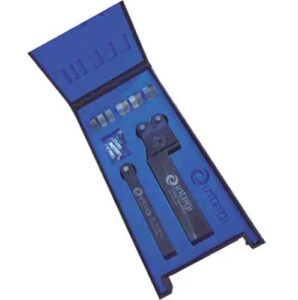
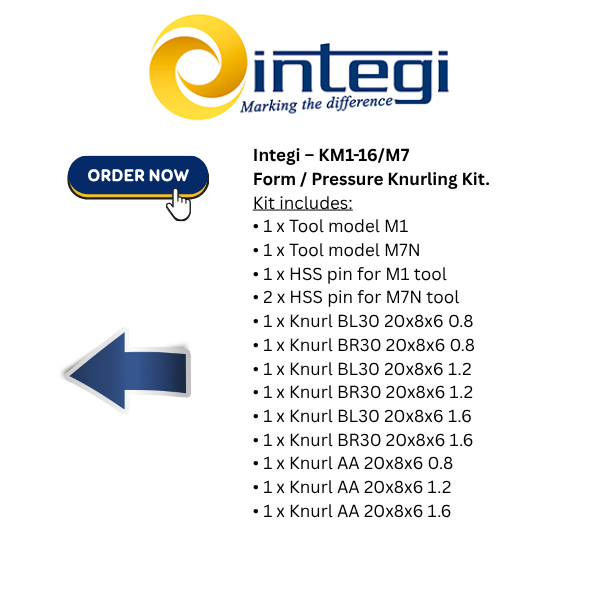
2. Cut-knurling — In cut-knurling the teeth are generated by removing material. This type of knurling does not generate overstrain on the machine and in many cases a higher quality and more accurate knurling is obtained. The tools used for this knurling technique fit knurls with a 30˚ angle in relation to the rotation axis of the piece. Due to this inclination the knurls cut the teeth while they are turning along the piece. The cut-knurling system does not generate an increase in the diameter of the machined piece as in theory the material is not deformed. Although it must be stated that there is always a slight displacement of the material that even though it is not of the same magnitude as that generated by form knurling, it must be taken into account when the piece to be made requires a certain precision in the final diameter. This knurling system is not applicable in all cases. Only RAA, RBL, RBR and RGE profiles can be run with cut knurling tools.
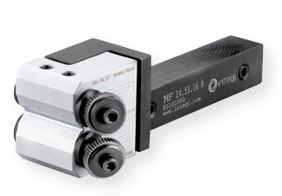
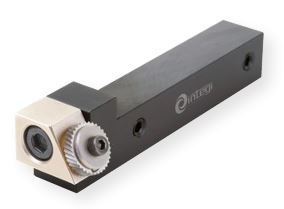
There are basically two knurling techniques.
1. RADIAL FEED KNURLING (R type) — Radial knurling is one in which the length of the knurling in the piece coincides with the thickness of the knurl, therefore the knurling tool is to be moved radially (feed usually represented with the letter R). In this knurling technique it is not necessary to use beveled knurls, although it is always better so as to avoid premature breakage of the teeth angles. The bevels give strength to the edges of the knurls. This knurling technique is only applicable to form knurling. It is never applicable to cut-knurling.
2. LONGITUDINAL FEED KNURLING (F type) — In longitudinal knurling the length of knurling piece is longer than the thickness of the knurl, therefore the knurling tool has to move longitudinally (feed usually represented with the letter F). This knurling technique is applicable to both form knurling tools and cut-knurling tools. In form knurling tools, the knurls must be beveled. In cut-knurling tools, the knurls must be unbeveled